

|
|
Exclusive Feature on Building the Tech Stack for the Future of Work |

When a Beam of Light Changed My Marketing Mindset

Harry Jose SVP, Marketing, Firstsource
The Moment in Room 32
I wasn’t expecting a marketing insight that evening.
We had successfully concluded the UK leg of Emergence, our annual CXO Summit. Aniket (our CMO) and I were spending the evening at the National Gallery in London. We had just come from the serenity and atmospheric mystery of Leonardo da Vinci’s Virgin of the Rocks when we turned the corner into Room 32 and found ourselves staring at Caravaggio’s Supper at Emmaus.
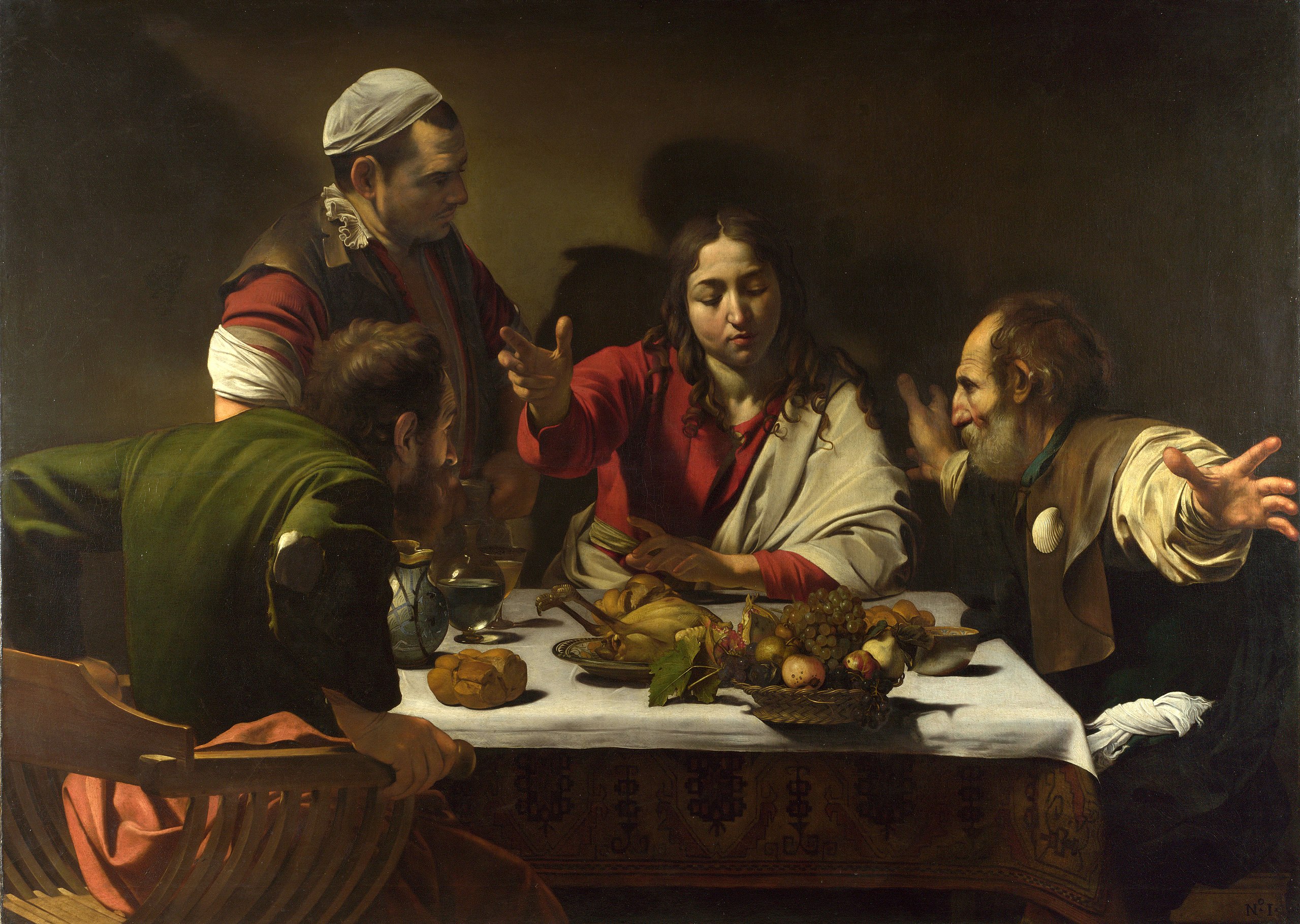
There it was—luminous, explosive, dramatically alive in a way that felt almost out of place among the polite Renaissance order around it. A beam of light cut through the darkness in a way I’d never truly appreciated before. The table seemed to push out of the canvas. The disciples looked like real men reacting to a revelation, not idealized figures posing for philosophical contemplation. And in that moment—standing before a painting made in 1601—I suddenly saw a perfect analogy for the challenge I’ve been wrestling with as a modern marketer.
This, I realized,is how marketing must evolve if we truly embrace the UnBPOTM mindset.
It was a strange moment of recognition, a painting created 400 years ago illuminating something about where our industry is headed today. A gesture frozen in oil paint suddenly reveals the shortcomings of our own marketing constructs, our inherited operating models, our legacy hierarchies, and our comfortable thinking.
Caravaggio was not just making art. He was breaking a paradigm. And UnBPOTM, at its heart, asks us to do exactly the same.
This article is my attempt to connect that moment of insight to the broader transformation unfolding across industries and to show why a 400-year-old painting may hold valuable lessons for the next chapter of marketing.
What Caravaggio Broke Away From — And Why It Matters
To understand why Supper at Emmaus hit me so hard, you have to appreciate what Caravaggio was reacting to.
He arrived in Rome at a time when the High Renaissance had reached near-perfection. Artists like Raphael and Michelangelo had mastered ideal anatomy, harmonious composition, intellectual narrative structure, and serene balance. Painting had become a kind of visual philosophy—beautiful, instructive, mathematically precise.
But it had also become predictable.
It assumed a certain type of viewer, a stable environment, and an audience trained to appreciate complexity and symbolism. It was designed for the court and high society, not the common man in a crowded church or marketplace. High Renaissance art lived in the world of ideals, not in the world of lived experience.
Into this world walked Caravaggio—unruly, streetwise, impatient with the rules. He didn’t just improve Renaissance painting; he changed the very rule book it was built on.
Caravaggio painted real people with dirty feet and pushed scenes to the edge of the frame. He used light not to model form but to reveal truth so that ordinary viewers standing in dim chapels could experience it. He democratized art.
And standing in front of the Supper at Emmaus, I suddenly realized: Marketing today faces a Caravaggio moment.We must evolve from idealized constructs to lived realities. From campaigns to encounters. From process to revelation. From silos to orchestration. From labor arbitrage to technology leverage. From knowing our customers “in theory” to meeting them in their moment.
UnBPOTM is the mindset shift that allows this transformation to happen.
The UnBPOTM Mindset
Before we bridge the analogy, let me set the stage.
UnBPOTM is the idea that the traditional Business Process Outsourcing model—built on linear tasks, labor cost optimization, and rigid process—no longer matches the world we operate in.
UnBPOTM proposes a tech-driven, intelligence-led, outcome-focused approach to work.
It sits on three big pillars:
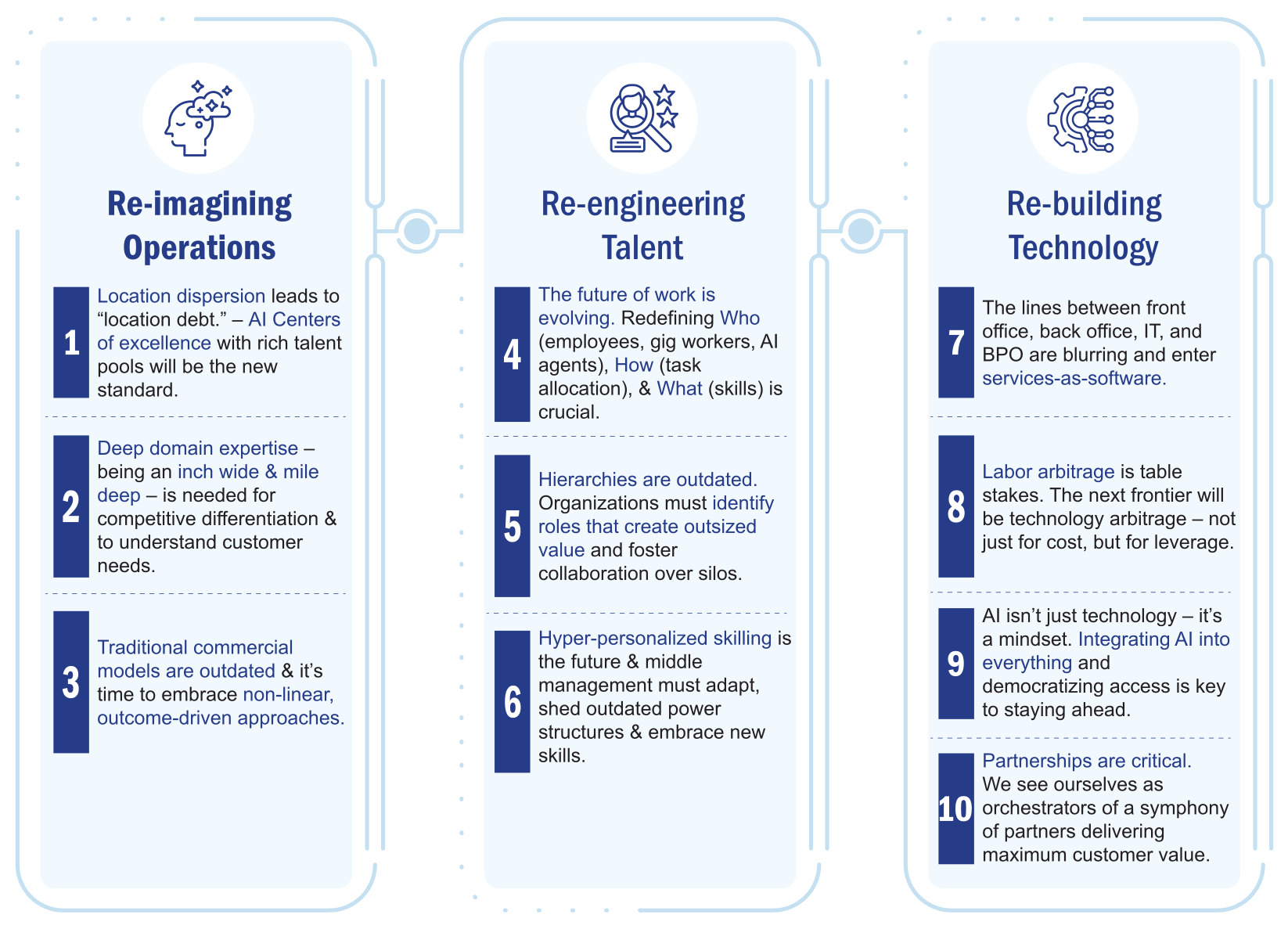
These ten tenets apply across industries—from banking to healthcare to retail to logistics. And, crucially for me, they also apply to marketing.
Yet we often treat marketing as if it exists outside the wider transformation happening in operations and talent. Many marketing teams continue to run on old assumptions:
Campaign calendars. Rigid processes. Functional silos. Manual content production. Hierarchical approval chains. “Labor-first” production models. Technology is treated as tools, not ecosystems.
In short, marketing still behaves like Renaissance art just before Caravaggio, a system optimized for a world that no longer exists. Let me share how Supper at Emmaus illuminates, quite literally, what UnBPOTM marketing can become.
The Table in Emmaus - Where Revelation Happens
When you stand before Caravaggio’s Supper at Emmaus, you notice something immediately: the table is too close.
It juts into your space. The basket of fruit is about to fall into your hands. One disciple’s elbow seems to push toward your chest. The scene is not framed politely; it erupts from the canvas.
Caravaggio does this because his paintings were designed not for private palaces but for crowded churches where passersby might only glance for a few seconds. He needed a visual language that grabs the viewer instantly. And pulls the viewer in.
This is exactly what marketing must do in an UnBPOTM world.
We operate in noisy environments. Our audiences are distracted, overwhelmed, and skeptical. The channels we use are crowded. Attention is scarce. Linear campaigns no longer cut through.
Marketing must move from messaging alphabet soup to moments of recognition - the Caravaggio strategy.
Just as the disciples recognize Christ in the breaking of bread, our audiences must recognize value, relevance, and truth in an instant.
And this realization began to open a larger analogy in my mind.
I. RE-IMAGINING OPERATIONS
Tenet 1: Location dispersion leads to “location debt.” –AI Centers of excellence with rich talent pools will be the new standard.
Caravaggio painted for real-world conditions—dim chapels, uneven lighting, diverse viewers. He created a visual language optimized for its environment.
Similarly, marketing today is fragmented: different teams, regions, agencies, content repositories, and tech stacks. We suffer from location debt—work scattered, inconsistent, disconnected. For a simple marketing campaign to happen, multiple teams need to come together – field marketing, campaign team, content team, design team, website team, and social media team.
The asset exists in different forms – Word documents, Photoshop files, HTMLs, and videos. Communication happens disjointedly across multiple mediums, such as emails, Teams calls, and calls. And there is no single system or platform where all relevant information about the campaign is available.
UnBPOTM marketing consolidates intelligence in AI Centers of Excellence:
- Unified data
- Unified content engines
- Unified tech stacks
- Unified audience intelligence
- Unified experimentation
Like Caravaggio’s single beam of light, these hubs focus attention where it matters. Platforms on which all aspects of marketing asset creation happen in the same place, at the same time—aided by AI. Enabling marketing to move from chaotic production to cohesive orchestration.
Tenet 2: Deep Domain Expertise → Competitive Differentiation
Caravaggio mastered a narrow set of truths—light, gesture, emotion, immediacy. He didn’t try to be universal; he tried to be specific, and that specificity made him unforgettable. Marketing must do the same.
Deep domain expertise allows marketers to:
- Understand customers at a granular level
- Craft narratives that resonate
- Anticipate friction points
- Interpret signals correctly
Generalist marketing creates generic outcomes. Focused expertise creates impact.
Tenet 3: Moving Beyond Traditional Commercial Models
Renaissance artists produced artifacts. Caravaggio produced results—impact, transformation, emotional recognition.
Marketing must also move beyond activities:
- Deliverables
- Campaigns
- Calendars
- Impressions
toward:
- Revenue outcomes
- Velocity influence
- Experience lift
- Customer lifetime value
Caravaggio didn’t paint for decoration; he painted for revelation. UnBPOTM marketing must deliver outcomes, not just assets.
II. RE-ENGINEERING TALENT
Tenet 4: The Future of Work - Who, How, What
Caravaggio overturned the traditional studio model. He didn’t rely on armies of apprentices or elaborate sketches. He painted from life, quickly, directly. He replaced hierarchy with immediacy.
UnBPOTM marketing does something similar.
The future marketing team includes:
- Human strategists
- Gig creators and specialists
- AI agents generating content, insights, and workflows
- Automation copilots
- Data interpreters
The “who” and the “how” are shifting dramatically. We are no longer artisans producing one piece at a time. We are orchestrators managing a hybrid intelligent workforce.
Tenet 5: Hierarchies Must Evolve
Caravaggio broke artistic hierarchies: he became influential through impact, not titles.
Marketing hierarchies—approval chains, rigid processes, over-layered management—slow us down. They keep us in the Renaissance when the industry around us is shifting to the Baroque.
In UnBPOTM marketing:
- Roles are defined by value creation
- Collaboration outranks control
- Speed is a strategic weapon
- Intelligence flows horizontally, not vertically
This is not chaos—it’s intentional flattening.
Tenet 6: Hyper-Personalized Skilling
Caravaggio’s assistants learned not to imitate but to adapt - observing how he used light, gesture, and realism to evoke emotion.
Today, marketing talent must upskill in areas that didn’t exist five years ago:
- Prompt craft
- AI content QA
- Signal interpretation
- Automated workflow design
- Multi-format storytelling
- Data-informed creativity
To enable this transformation, middle management in marketing must evolve from controllers to coaches, facilitating continuous learning rather than gatekeeping expertise.
Upskilling is not optional. It is survival.
III. RE-BUILDING TECHNOLOGY
Tenet 7: Blurring Front Office, Back Office, IT, and BPO
Caravaggio blurred boundaries:
- Painting + theater
- Surface + space
- Realism + symbolism
In Supper at Emmaus, the table spills into our world; the boundary collapses.
Similarly, UnBPOTM marketing doesn’t treat:
- Demand gen
- Content
- Brand
- Analytics
- Sales enablement
- Marketing ops
as separate silos.
The tech stack becomes the canvas. Workflows become the composition.
Data becomes the light source.
We no longer “do” marketing. We run a marketing system.
Tenet 8: Technology Arbitrage as the New Frontier
Renaissance workshops relied on labor scale. Caravaggio relied on leverage-one beam of light, one moment, one truth. Marketing can no longer win on labor-driven production. Technology-driven leverage is the only competitive edge.
- AI-assisted content generation
- Automated personalization
- Predictive analytics
- Real-time optimization
- Modular content systems
- Orchestration platforms
Tech arbitrage is not about saving costs. It’s about amplifying impact.
Tenet 9: AI as Mindset, Not Tool
Caravaggio didn’t use realism as a technique; it was his worldview. Similarly, AI is not a tool we plug in. It is amindset:
- Everything is data
- Everything can be personalized
- Everything can be accelerated
- Everything can be orchestrated
- Everything can be democratized
Marketing becomes fluid, adaptive, and intelligent. AI isn’t here to help us work faster. It’s here to help us work differently.
Tenet 10: Partnership as Symphonic Orchestration
Caravaggio’s influence spread rapidly because his work was part of a network—patrons, painters, chapels, assistants, rivals. He wasn’t isolated; he was amplified.
UnBPOTM marketing works the same way.
Partners in:
- Data
- Platforms
- Creative production
- Distribution
- AI ecosystems
must be orchestrated deliberately to create customer value.
Marketing becomes the conductor of the symphony, orchestrating diverse partners to create harmonious customer value.
Bringing It All Together: Marketing’s Caravaggio Moment
Standing in front of Supper at Emmaus, I saw a moment frozen in time —one of recognition, one of revelation. And I realized that marketing is standing at a similar threshold. We can continue polishing the old Renaissance model — campaign calendars, functional silos, manual production, legacy KPIs — or we can embrace a new way of seeing.
Caravaggio teaches us that innovation doesn’t come from improving the old system.
It comes from changing the context in which the system operates.
UnBPOTM marketing is that context shift.
It asks us to:
- Reimagine operations,
- Reengineer talent,
- Rebuild technology,
- Reorient toward outcomes,
- Orchestrate partnerships,
- and embrace intelligence as our new light source.
The beam cutting across Caravaggio’s canvas is the same beam cutting across our industry today - the light of AI, data, insight, automation, and new talent models.
We can either squint and admire the past or step into the illumination of what’s possible.
Even if you’re not a marketer, Caravaggio’s lesson applies to you:
- Your operations must be redesigned for where work happens now.
- Your talent must evolve into hybrid, flexible, intelligent systems.
- Your technology must shift from utility to architecture.
- Your outcomes must anchor your investments.
- Your partnerships must be orchestrated, not accumulated.
- Your organization must embrace revelation - truth made visible over complexity.
Every industry is experiencing a Caravaggio moment. The only question is whether we recognize it.
The Elbow That Reaches Toward Us
As I finally stepped away from Supper at Emmaus, I kept looking at that disciple’s elbow, jutting out, defying the frame, breaking into my space.
It felt like a metaphor for the moment we’re in.
The world is pushing into our frame - new technology, new expectations, new behaviors, new competitors. We cannot stand at a respectful distance anymore. We must meet the moment. We must reach forward. We must break the frame of how we’ve always done things.
Caravaggio did this with paint. UnBPOTM does this with technology, talent, and mindset.
Marketing must now do the same. Because just like in Emmaus, the moment of recognition changes everything.
 Download Now